Oven Won’t Turn On? Here’s What’s Likely Wrong — and What to Do Next in Southern Brisbane
Oven Won’t Turn On? Here’s What’s Likely Wrong — and What to Do Next in Southern Brisbane
A completely dead oven is a different problem to one that heats slowly or cooks unevenly. When your oven won’t turn on at all — no display, no heat, no response — the cause is almost always electrical, and the diagnostic approach is different to a standard heating fault.
The good news is that most of the common causes are well-known and repairable. Here’s a clear breakdown of what’s likely going wrong, what you can safely check yourself, and when to call a fully licensed technician.
The Most Common Reasons an Oven Won’t Turn On
1. Tripped Circuit Breaker or Blown Fuse
This is the first thing to check — and it costs nothing. Electric ovens in Australian homes draw significant power, typically running on a dedicated 240V circuit. A power surge, a momentary overload, or even a fault elsewhere on the same circuit can trip the breaker and cut power to the oven entirely.
Go to your switchboard and look for a tripped breaker — it will be in a different position to the others, or sitting in a middle position. Switch it fully off and then back on. If the oven comes back to life, the breaker was the cause. If it trips again immediately, there’s likely a fault inside the oven itself that needs professional diagnosis.
Older homes with fuse boxes rather than circuit breakers may have a blown fuse instead — this will need to be replaced with one of the same amperage.
2. Blown Internal Thermal Fuse
Many modern ovens — particularly Bosch, Miele, AEG, and Smeg models — contain an internal thermal fuse as a safety device. If the oven overheats for any reason, the thermal fuse blows and cuts all power to the appliance. Unlike a circuit breaker, a thermal fuse doesn’t reset — it needs to be physically replaced.
This is one of the most common causes of an oven that goes completely dead, and it’s particularly common after a self-cleaning cycle, which runs the oven cavity at very high temperatures. If your oven stopped working after a cleaning cycle or after an unusually long cook at high heat, a blown thermal fuse is the most likely cause.
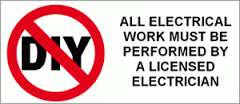
Thermal fuse replacement is a professional repair — accessing the fuse requires disassembling part of the oven, and working near electrical components carries real risk.
3. Faulty Control Board
The control board is the electronic brain of your oven — it manages power distribution, temperature settings, and every function the appliance performs. When the control board fails, the oven may go completely dark, display error codes, or respond erratically to controls.
Control board faults are more common in newer digitally-controlled ovens and in premium European brands like Miele, Bosch, Neff, and Siemens. Signs of a control board fault include a blank display that won’t respond, buttons that work intermittently, or an oven that powers on but won’t hold any settings.
Control board repairs or replacements are among the more expensive oven repairs — parts for premium brands in particular can be costly. A proper diagnosis by a licensed technician is essential before committing to this repair, as the symptoms of a faulty control board can overlap with other faults.
4. Burnt or Loose Wiring Connections
Over years of use, the internal wiring connections in an oven — particularly where power supply wires connect to the heating element — can burn out, corrode, or work loose. When this happens, power can’t reach the components that need it, and the oven either won’t turn on at all or will fail intermittently.
This fault is more common in older ovens and in brands that see heavy daily use — Westinghouse, Electrolux, Simpson, and Fisher & Paykel freestanding ovens are among the most commonly affected. It’s not a repair that can be safely performed without proper tools and training.
5. Faulty Igniter or Spark Electrode — Gas Ovens
If you have a gas oven and it won’t ignite, the igniter or spark electrode is the most common cause. These components wear out over time, and when they fail, the gas valve won’t open and the oven stays cold. You may hear the oven attempting to click without igniting, or there may be no response at all.
Gas oven faults must always be repaired by a licensed technician. Never attempt to inspect or adjust gas components yourself — a gas leak in a home is a serious safety risk.
6. Faulty Temperature Sensor
Some ovens won’t turn on at all if the temperature sensor — the probe inside the oven cavity that monitors heat — sends a faulty reading to the control board. The board interprets the incorrect reading as a safety issue and prevents the oven from operating.
This fault is more common in fan-forced ovens and in models with digital temperature displays. It often presents as an oven that powers on but won’t begin heating, or that displays a fault code related to temperature. Sensor replacement is a straightforward and affordable repair for a qualified technician.
What You Can Safely Check Yourself
Checking the circuit breaker at your switchboard is safe and should always be the first step. If your oven has a digital display, note any error codes showing — these can help a technician diagnose the fault faster and may reduce your callout time.
Beyond that, leave it to a professional. Ovens run on 240V circuits, and internal components hold charge even after the oven appears to be off. Incorrect repairs are dangerous and can void your warranty.
Gas vs Electric — Does It Change the Diagnosis?
Yes. For electric ovens, the most common causes of a complete no-power fault are the circuit breaker, thermal fuse, control board, or wiring. For gas ovens, a faulty igniter or spark electrode is the most likely cause, alongside the same power supply checks.
If you’re unsure which type of oven you have, check the model label on the door frame or rear of the appliance — it will specify gas or electric along with the brand and model number.
Is It Worth Repairing?
In most cases, yes — particularly if your oven is under 10 years old. Repairs like thermal fuse replacement, sensor replacement, and wiring repairs are cost-effective and fast. Control board replacements are more expensive but still typically cheaper than a full oven replacement, especially for built-in models where installation costs add up quickly.
A reputable technician will give you a clear, upfront quote before any work begins so you can make an informed decision.
Same-Day Oven Repairs Across Southern Brisbane
Brisbane Professional Appliance Repairs provides fast, same-day oven repairs throughout southern Brisbane, including Holland Park, Mount Gravatt, Upper Mount Gravatt, Greenslopes, Coorparoo, Sunnybank, Sunnybank Hills, Carindale, Tarragindi, Annerley, Moorooka, Yeronga, Wishart, Salisbury, Eight Mile Plains, Mansfield, MacGregor, Robertson, Rochedale, Stretton, Kuraby, Camp Hill, Carina, Norman Park, Stones Corner, Coopers Plains, Acacia Ridge, Algester, Runcorn, and surrounding suburbs.
Our fully licensed technicians carry common parts on the van and are experienced across all major oven brands — Westinghouse, Electrolux, Simpson, Bosch, Miele, Smeg, AEG, Neff, Siemens, Fisher & Paykel, Ilve, Bertazzoni, Blanco, and more.
If your oven won’t turn on, don’t go without a working kitchen. Book online 24/7 or give us a call — we’ll get a technician out to you the same day.
Book online at: https://brisbaneprofessionalappliancerepairs.com.au
Call us: 07 3559 1888