Why Won’t My Washing Machine Drain? Common Causes — and What Southern Brisbane Homeowners Should Do Next
Why Won’t My Washing Machine Drain? Common Causes — and What Southern Brisbane Homeowners Should Do Next
You open the lid expecting clean, dry laundry — and find a drum full of murky, standing water instead. It’s one of the most frustrating appliance problems you can run into, especially when the laundry is already piling up. If your washing machine won’t drain, you’re not alone. Drainage faults are the single most common washing machine repair across southern Brisbane, accounting for nearly a third of all callouts.
The good news? Most causes are diagnosable quickly, and in many cases, a fully licensed technician can have your machine back in action the same day.
Here’s what’s likely going wrong — and what to do about it.
The Most Common Reasons Your Washing Machine Won’t Drain
1. Blocked Pump Filter
This is the number one culprit. Coins, hair ties, lint, tissues, and small items left in pockets find their way into the pump filter over time, gradually restricting water flow until the machine can’t drain at all. It’s especially common in households with kids.
Most front-loaders — including LG, Samsung, Bosch, and Fisher & Paykel models — have an access panel at the bottom front of the machine where the filter sits. If you’ve never cleaned yours, there’s a reasonable chance this is the problem.
2. Clogged or Kinked Drain Hose
The drain hose runs from the back of your machine to a wall outlet or standpipe. Over time it can become clogged with lint and debris, or get kinked if the machine has been moved. Either way, water has nowhere to go. This is a quick fix when caught early — but if it’s been partially blocked for a while, it can strain the pump and create a bigger problem.
3. Faulty Drain Pump
If the filter is clear and the hose is fine, the drain pump itself may have failed. The pump is what actively forces water out of the drum. When it wears out or seizes, your machine will sit with water in the drum and often display an error code — common ones include E21 on Bosch machines, UE or OE on LG, and 5E or 5C on Samsung.
Pump replacements are one of the more straightforward washing machine repairs, but they do require a licensed technician — pulling the machine apart incorrectly can cause further damage or create a safety issue.
4. Lid Switch or Door Latch Fault
On top-loaders, a faulty lid switch can prevent the machine from advancing to the drain and spin cycle — the machine thinks the lid is open even when it’s not. On front-loaders, a failed door latch has a similar effect. Westinghouse, Simpson, and Electrolux top-loaders are particularly prone to lid switch issues as they age.
You may notice the machine fills and agitates normally but then stops dead before draining.
5. Worn or Broken Drive Belt
Less common, but worth knowing: a snapped drive belt on older machines can prevent the drum from spinning, which in turn leaves water sitting in the machine. If you hear the motor running but the drum isn’t moving, this is worth investigating.
Does It Matter Whether You Have a Front Loader or Top Loader?
Yes — and it affects both the likely cause and the repair approach.
Front-loaders (common brands include Miele, Bosch, Asko, and LG) tend to have more complex drainage systems and are more sensitive to pump and seal issues. Brisbane’s subtropical humidity also accelerates mould growth on front-loader door seals, which can indirectly cause drainage problems if the seal swells or warps.
Top-loaders (Fisher & Paykel, Simpson, Westinghouse, Samsung) are generally simpler mechanically, but are more prone to lid switch faults and belt wear. They’re also easier and faster to work on, which can mean lower labour costs on straightforward repairs.
Either way, a proper diagnosis is the first step — don’t assume the worst before a technician has had a look.
Can I Fix It Myself?
Cleaning the pump filter yourself is safe and worthwhile if your manual shows you how — just have towels ready because water will spill when you open it. Checking for a kinked hose is also a sensible first step.
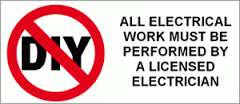
Beyond that, it’s best to call in a professional. Washing machines involve both water and electricity, and incorrect repairs can void your manufacturer warranty, damage internal components, or create a genuine safety hazard. In Queensland, certain electrical repair work must legally be carried out by a licensed technician.
When to Book a Repair — and When to Consider Replacing
A good rule of thumb: if your machine is under eight years old and the fault is isolated, repair is almost always the smarter financial choice. Washing machines typically last 10 to 12 years, and a single repair carried out correctly can easily buy you another five years of reliable use.
If your machine is older, has had repeated problems, or the repair cost is approaching half the price of a comparable new model — that’s when replacement starts to make sense. A reputable technician will give you an honest assessment before any work begins.
Same-Day Washing Machine Repairs Across Southern Brisbane
Brisbane Professional Appliance Repairs provides same-day washing machine repairs throughout southern Brisbane, including Holland Park, Mount Gravatt, Sunnybank, Carindale, Greenslopes, Coorparoo, Tarragindi, Annerley, Moorooka, Yeronga, Wishart, and Salisbury.
Our fully licensed technicians work on all major brands — LG, Samsung, Fisher & Paykel, Bosch, Miele, Westinghouse, Simpson, Electrolux, Asko, and more. We carry common parts on the van, which means many repairs are completed in a single visit.
If your washing machine won’t drain, don’t wait for the situation to get worse. Book online 24/7 or call us directly — we’ll get someone out to you fast.
Book online at: https://brisbaneprofessionalappliancerepairs.com.au
Call us: 07 3559 1888